
You're on your way!
You're being directed to a third-party site to get a quote.
Since 2011, we've helped more than 5 million visitors understand Medicare coverage.
By shopping with third-party insurance agencies, you may be contacted by a licensed insurance agent from an independent agency that is not connected with or endorsed by the federal Medicare program.
These agents/agencies may not offer every plan available in your area. Please contact Medicare.gov or 1-800-Medicare to get information on all options available.
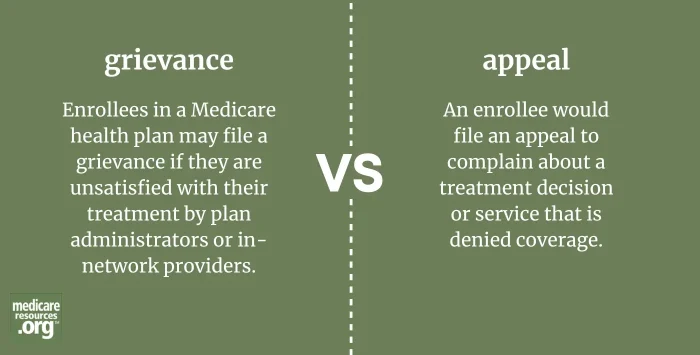
Enrollees in a Medicare health plan may file a grievance, also known as a complaint, if they are unsatisfied with their treatment by those who administer their Medicare Advantage or Medicare Part D plan. Conversely, an enrollee would file an appeal to complain about a treatment decision or service that is denied coverage.1
A grievance may or may not involve a request for remedial action (as opposed to an appeal, in which the enrollee is specifically asking that a plan decision be overturned).2
Examples of situations in which a Medicare beneficiary might file a grievance include:3
The Medicare grievance process is only used by Medicare enrollees and their representatives/caregivers. Healthcare providers use a different complaint/dispute resolution process.2
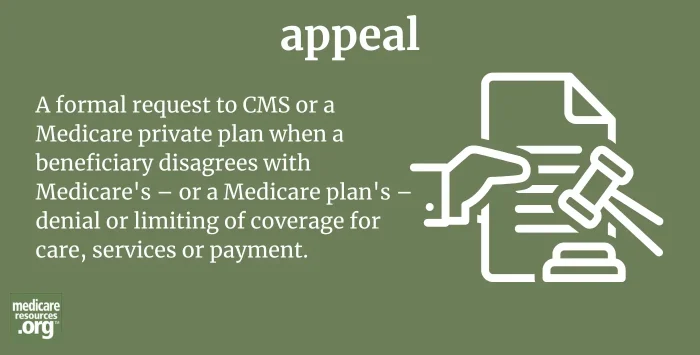
An appeal is a formal request to Medicare to have an official decision reviewed in respect to a payment or policy you may wish to dispute.

You can usually address many Medicare Advantage or Part D enrollment issues by contacting Social Security or 1-800-MEDICARE. But you have to appeal coverage denials directly to your insurer.
An appeal is a formal request to Medicare to have an official decision reviewed in respect to a payment or policy you may wish to dispute.
You can usually address many Medicare Advantage or Part D enrollment issues by contacting Social Security or 1-800-MEDICARE. But you have to appeal coverage denials directly to your insurer.
Footnotes

