
You're on your way!
You're being directed to a third-party site to get a quote.
Since 2011, we've helped more than 5 million visitors understand Medicare coverage.
By shopping with third-party insurance agencies, you may be contacted by a licensed insurance agent from an independent agency that is not connected with or endorsed by the federal Medicare program.
These agents/agencies may not offer every plan available in your area. Please contact Medicare.gov or 1-800-Medicare to get information on all options available.
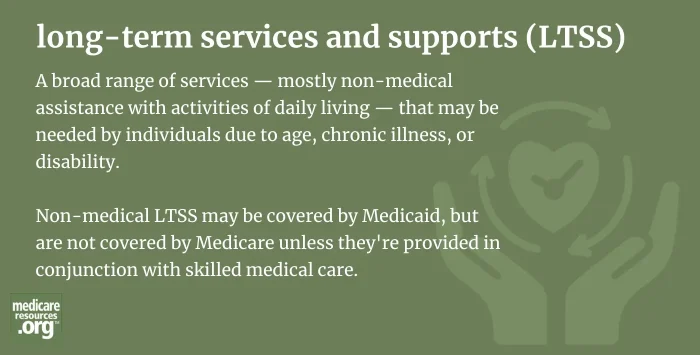
The term long-term services and supports (LTSS) encompasses an array of medical and personal care services for people who struggle with self-care due to aging, illness or disability. People commonly receive LTSS services for months or even years (and this is why LTSS are sometimes referred to as “long-term care”).
Until recently, most Americans received their LTSS in institutional settings, such as nursing homes, intermediate care facilities for individuals with intellectual and developmental disabilities (IDD), and psychiatric hospitals.
People who aren’t able to live safely at home usually have to enter a nursing home (sometimes called a skilled nursing facility). These facilities provide both medical and personal care services. (Personal care services include help with bathing, toileting, getting dressed, and moving around the home.)
Medicare covers up to 100 days of nursing home care as long as the beneficiary needs skilled services (such as nursing and rehabilitation) in an inpatient setting. But Medicare coverage ends once a beneficiary only needs custodial care – and beneficiaries must apply for Medicaid or pay for any additional care themselves. (Custodial care is any non-medical care that can be provided by caregivers who aren’t licensed. This is why a significant portion of all LTSS are provided by unpaid family members.)
Over the past 20 years, more people have begun receiving LTSS at home through home and community-based services (HCBS) programs. HCBS programs offer some of the same care available in institutional settings along with other services to help beneficiaries live in the community. HCBS services can include:
Every state’s Medicaid program has to cover nursing home services, but access to HCBS is optional and HCBS programs in some states have waiting lists.
People who need more care than can be provided in their home but don’t need 24-hour nursing support sometimes enter an assisted living facility (also known as “board and care” or “adult living supported care”). Assisted living blurs the line between institutional and HCBS care, because residents live in independent apartments with varying levels of supervision and assistance. Residents usually share common areas and receive help with meals, personal care, housekeeping and laundry.
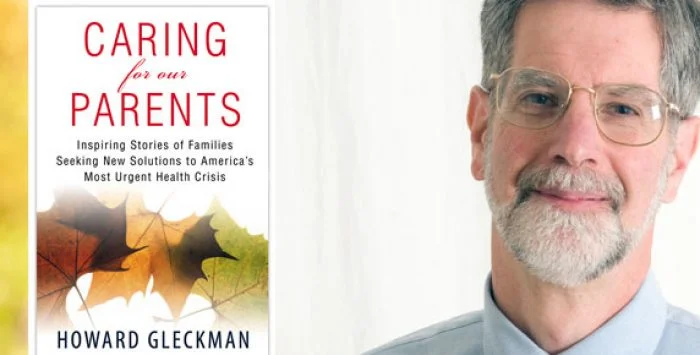
Howard Gleckman, one of the nation’s leading experts on family caregiving and long-term care and author of Caring for our Parents, talks with Harold Pollack about the nation's looming national disability crisis.

Medicare covers almost all aspects of hospice care with little expense to patients or families, as long as a Medicare-approved hospice program is used.
Howard Gleckman, one of the nation’s leading experts on family caregiving and long-term care and author of Caring for our Parents, talks with Harold Pollack about the nation's looming national disability crisis.
Medicare covers almost all aspects of hospice care with little expense to patients or families, as long as a Medicare-approved hospice program is used.

