
You're on your way!
You're being directed to a third-party site to get a quote.
Since 2011, we've helped more than 5 million visitors understand Medicare coverage.
By shopping with third-party insurance agencies, you may be contacted by a licensed insurance agent from an independent agency that is not connected with or endorsed by the federal Medicare program.
These agents/agencies may not offer every plan available in your area. Please contact Medicare.gov or 1-800-Medicare to get information on all options available.

As you get older, odds are you will have some degree of hearing loss. The National Institutes of Health reports that one-third of people between 65 and 74 years old and half the people over 75 years old have hearing loss.1 This not only impacts seniors’ quality of life but it can also be a safety issue if it is not addressed.
Even though so many Medicare beneficiaries experience hearing loss, Original Medicare – Part A and Part B – offers limited coverage for hearing care services and products.2 While Original Medicare does cover a hearing screen for anyone who has symptoms – hearing loss or ringing in the ears, for instance – it does not pay for hearing aids, even after a problem has been diagnosed.3
Part B may pay for cochlear implants for people with hearing loss.4 These electronic devices can restore hearing by directly stimulating the nerve responsible for hearing, i.e., the cochlear nerve. Interestingly, one of the requirements that must be met to get a cochlear implant is that you must have tried hearing aids but found them ineffective. It seems somewhat ironic to me that hearing aids are not covered in the first place and cochlear transplants are.
Part A and Part B also do not cover routine hearing screening tests. This could make people delay getting testing when they start to develop symptoms. According to the National Council on Aging, many people wait as long as ten years from their first symptoms until the time they get a hearing aid.5
So why doesn’t Medicare cover hearing aids? When Medicare was created in the 1960s, hearing aids were “routinely needed and low in cost,”6 so it was expected that beneficiaries would be able to cover the cost themselves – and hearing aids were statutorily excluded from Medicare coverage.
But many modern hearing aids can cost several thousand dollars,7 and a recent study found that the vast majority of Medicare beneficiaries with some degree of hearing loss do not have hearing aids (interestingly, this was true for both Medicare Advantage and Original Medicare enrollees, despite the fact that most Medicare Advantage plans include at least some coverage for hearing aids).8
To add hearing aid coverage to Original Medicare would require Congress to enact legislation. Congress has certainly tried. In 2021, the Medicare Hearing Aid Coverage Act was introduced although it did not come to a vote.9 Later that same year, The Build Back Better Act – which had a provision for Medicare to add hearing aid coverage – passed the U.S. House of Representatives by a majority vote (220-213).10 Although the measure did not ultimately pass in the Senate, it shows that many legislators are supportive of adding hearing aid coverage (and dental and vision coverage) to Medicare.
Thankfully, many Medicare Advantage (Medicare Part C) plans offer some hearing coverage as an extra benefit (coverage that goes beyond what Original Medicare provides). Although as noted above, utilization of hearing aids remains quite low among Medicare Advantage enrollees.8
Original Medicare (including Part A and Part B) does not cover routine hearing tests or hearing aids. But most Medicare Advantage plans (Part C) do offer at least some coverage for hearing aids.
If this coverage is something you’re interested in, you’ll need to shop for a Medicare Advantage plan that offers the benefit. The good news is that shouldn’t be too hard to find one: “Virtually all” Medicare Advantage plans offer coverage for hearing exams and/or hearing aids in 2026.11
If you want to compare Medicare Advantage plans – or enroll in one – consider “shopping around” during the annual Medicare open enrollment period, which starts October 15 and continues through December 7. There is also a Medicare Advantage Open Enrollment Period, from January 1 to March 31, during which existing Medicare Advantage enrollees can make one plan change, either to a different Medicare Advantage plan or to Original Medicare.
Call 1-844-309-3504 now to learn more about Medicare supplemental benefits with a licensed advisor.
The hearing coverage through Medicare Advantage can include some or all of the following: a hearing exam, a hearing aid evaluation, a hearing aid fitting, and of course, the hearing aids themselves. Each of these services may have their own copay, though some plans may offer the exams with no out-of-pocket cost. Sorry to say, the cost of hearing aids themselves is not always covered.
Your plan may require you to get a physician referral before your hearing coverage kicks in. When it comes to the hearing aids, each Medicare Advantage plan may have preferred brands it will cover and the plan may also have limits as to how much it will pay. There’s a great deal of variation from one plan to another in terms of restrictions that apply to hearing aid coverage.
A KFF analysis found that about a third of plans in 2021 had dollar limits on how much they would pay for hearing aids (ranging from $66 to $4,000, and averaging $960 – a fraction of the cost of hearing aids), while most of the rest have a frequency limit on how often they’ll cover hearing aids. The KFF review found only 1% of Advantage plans paid for hearing aids with no dollar limit or frequency limit.12
Like most insurance plans, your Medicare Advantage plan will likely have a deductible. If so, you may have to pay the deductible before your plan starts to pay for hearing aids or other hearing-related care. But the details vary from one plan to another, and the hearing aid benefit on a specific plan may or may not count toward the deductible; be sure to read the details of your plan so that you know what to expect. You may also have a copay or coinsurance when you get a hearing exam, hearing aid exam/fitting, or hearing aid(s).
According to KFF, as many as 22% of plans did not have a cost-sharing requirement for hearing aids in 2019 but 60% of plans had a copay ranging from $5 to $3,355.12 It helps to shop around. And of course, hearing benefits are only one part of the decision-making process: You also need to balance how the plan will cover the rest of your medical and prescription needs, make sure you can afford the out-of-pocket costs (and premium, if the plan has a premium), and be certain that your doctors are in the plan’s provider network.
If you want to shop for Medicare plans, you can use the Medicare Plan Compare site to get a sense of what plans are available in your area. When you do this, pay close attention to the Extra Benefits section. Here you will find the copays for the different hearing services.
As helpful as Medicare Plan Compare is as a first step, it does not include all the information you will need. What kinds of hearing aids are covered? What brands are covered? What are the plan’s limits on hearing services? You may then want to reach out to the plan directly or find an insurance broker in your area to find out more.
In August 2022, the FDA finalized a rule that allowed adults with mild to moderate hearing loss to purchase hearing aids over-the-counter starting in October 2022.13 Like prescription hearing aids, over-the-counter hearing aids require FDA approval to confirm “reasonable assurance of safety and effectiveness.”
The U.S. Government Accountability Office released an analysis of the impact of OTC hearing aids in 2024.14 On average, they noted costs ranging from $200 to $1,000 depending on the type of hearing aid. Unfortunately, they also noted that as many as 17% of Medicare beneficiaries may be unable to afford hearing aids costing $500 or more.
OTC hearing aids may be convenient, but they may not be for everyone.15 Because they can be purchased without evaluation by an audiologist, it is possible that someone could buy the wrong kind for the type of hearing loss they have. Unless they pay out of pocket, they will not have the benefit of a fitting by an audiologist, which could make the hearing aids more comfortable. It is also important to keep in mind that not all OTC hearing aids will be returnable. Buyers should only choose a hearing aid that can be returned, if necessary.
And Original Medicare still won’t cover the cost. So although OTC hearing aids will be cheaper than prescription hearing aids, it will still be an out-of-pocket expense. For Medicare beneficiaries who still have money remaining in a health savings account (HSA), the OTC hearing aids will be an HSA-eligible expense, just like prescription hearing aids.16
Tanya Feke, M.D. is a licensed, board-certified family physician living in New Hampshire. As a practicing primary care physician in Connecticut and an urgent care physician in New Hampshire, she saw first-hand how Medicare impacted her patients. In recent years, her career path has shifted to consultant work with a focus on utilization management and medical necessity compliance.
Dr. Feke is an expert in the field, having Medicare experience on the frontlines with patients, hospital systems, and insurers. To educate the public about ongoing issues with the program, she authored “Medicare Essentials: A Physician Insider Reveals the Fine Print.” Her analysis of Medicare issues is frequently referenced by the media, and she is a contributor to multiple online publications.
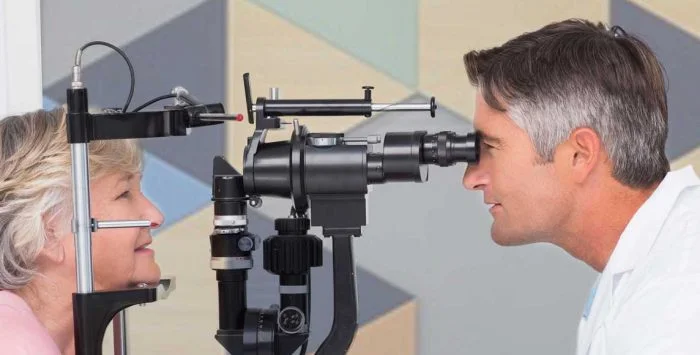
Medicare won’t pay for routine vision services, but it will cover the cost of diagnosing and treating most eye diseases and conditions.

According to a Kaiser Family Foundation (KFF) analysis of Medicare Current Beneficiary Survey (MCBS), the average Medicare beneficiary paid $5,460 out-of-pocket for their care in 2016. Spending was highest among Medicare beneficiaries who had no supplemental coverage ($7,473), and was somewhat lower for those who had Medigap coverage ($6,621). Beneficiaries with Medicare and Medicaid spent the least out-of-pocket, paying only $2,665 in 2016.
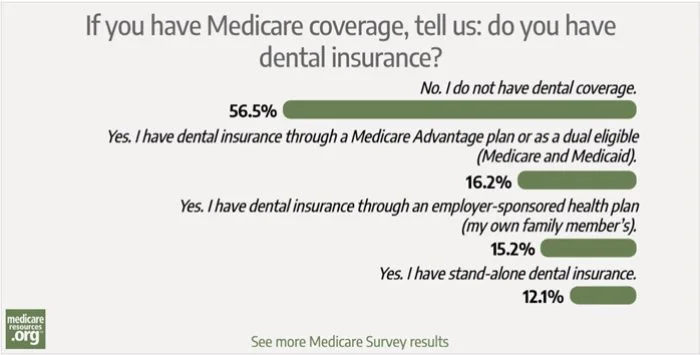
In our most recent reader survey, the majority of our respondents told us that they don't currently have dental coverage. Here's why.

Once you sign up for Medicare, you’re no longer eligible to contribute to a health savings account (HSA), so in some cases, it pays to hold off on enrolling.
Medicare won’t pay for routine vision services, but it will cover the cost of diagnosing and treating most eye diseases and conditions.
According to a Kaiser Family Foundation (KFF) analysis of Medicare Current Beneficiary Survey (MCBS), the average Medicare beneficiary paid $5,460 out-of-pocket for their care in 2016. Spending was highest among Medicare beneficiaries who had no supplemental coverage ($7,473), and was somewhat lower for those who had Medigap coverage ($6,621). Beneficiaries with Medicare and Medicaid spent the least out-of-pocket, paying only $2,665 in 2016.
In our most recent reader survey, the majority of our respondents told us that they don't currently have dental coverage. Here's why.
Once you sign up for Medicare, you’re no longer eligible to contribute to a health savings account (HSA), so in some cases, it pays to hold off on enrolling.
Footnotes

