
You're on your way!
You're being directed to a third-party site to get a quote.
Since 2011, we've helped more than 5 million visitors understand Medicare coverage.
By shopping with third-party insurance agencies, you may be contacted by a licensed insurance agent from an independent agency that is not connected with or endorsed by the federal Medicare program.
These agents/agencies may not offer every plan available in your area. Please contact Medicare.gov or 1-800-Medicare to get information on all options available.
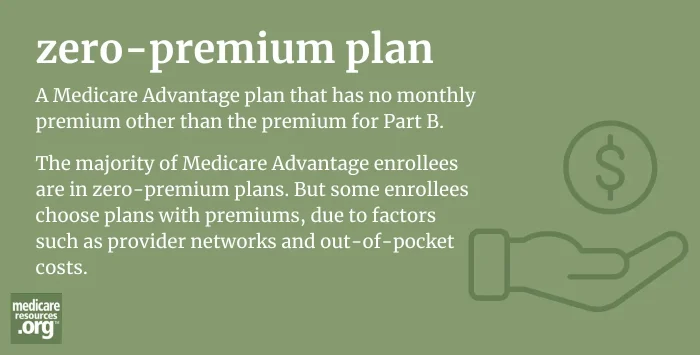
A zero-premium plan is a Medicare Advantage plan that has no monthly premium (other than the Medicare Part B premium). In other words, you don’t pay anything to the insurance company each month for your coverage. More than three-quarters of Medicare Advantage enrollees are in zero-premium plans.1 But across all Medicare Advantage plans with integrated Part D coverage (MA-PDs), the average premium is projected to be about $11.50/month in 2026.2
If you have a zero-premium plan, you pay $0/month to your Medicare Advantage insurer. But all enrollees pay the Part B premium ($202.90/month for most enrollees in 2026),3 unless they are also enrolled in Medicaid, a Medicare Savings Program, or a Medicare Advantage plan that pays some of the Part B premium on their behalf.
So if you have a Medicare Advantage plan that costs about $30/month, you’ll pay about $233/month in total premiums. But if you have a zero-premium Medicare Advantage plan — which is true for the majority of enrollees — you’ll only pay the $202.90/month for Part B (note that the Part B premium is higher if you have income above $109,000/year).
Almost all Medicare Advantage enrollees (99%) had access to at least one zero-premium plan for 2025, and about three-quarters of Medicare Advantage enrollees select a zero-premium plan. But about 9% of 2025 Medicare Advantage enrollees were in plans with premiums of at least $50/month.1
So why would people opt to pay premiums for Medicare Advantage coverage when they could have a free option instead? There are a variety of reasons, including provider networks, drug formularies (ie, covered drug lists), and total costs. In some cases, the provider networks for the zero-premium plans might not include an enrollee’s current doctors. Or they might have drug formularies that don’t include the medications a person is taking.
But out-of-pocket costs are another big consideration. The zero-premium plan available in your area might have a higher deductible, copays, and/or total out-of-pocket exposure than the plans that have premiums. A healthy enrollee might feel like that’s an acceptable gamble, but an enrollee with ongoing medical conditions might decide that it’s worth paying premiums every month to have more robust coverage. As with most things related to health coverage, there’s no one-size-fits-all solution.

Medicare provides broad coverage but doesn't cover everything. Original Medicare, for example, does not cover routine dental care, dentures, routine eye care, corrective lenses, dentures, hearing aids, or long-term nursing home care.

An overview of 2025 premiums and out-of-pocket costs for Original Medicare, Medicare Advantage, Medigap and Medicare Part D.
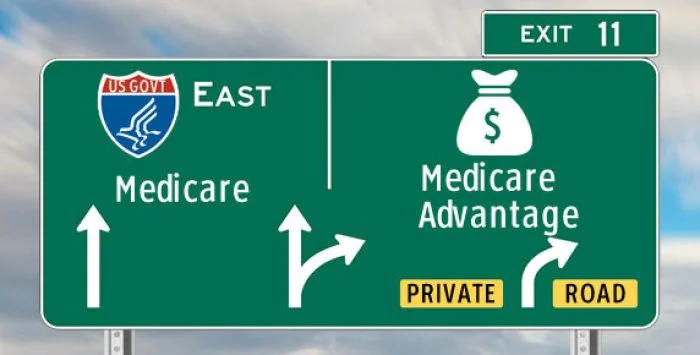
Learn what Medicare Advantage (Medicare Part C) will cover, how much premiums cost, plan eligibility, enrollment windows and benefits.

You don't have to be poor to get an ACA-compliant health plan with $0 premiums. See who's getting no-premium coverage and why – and whet
Medicare provides broad coverage but doesn't cover everything. Original Medicare, for example, does not cover routine dental care, dentures, routine eye care, corrective lenses, dentures, hearing aids, or long-term nursing home care.
An overview of 2025 premiums and out-of-pocket costs for Original Medicare, Medicare Advantage, Medigap and Medicare Part D.
Learn what Medicare Advantage (Medicare Part C) will cover, how much premiums cost, plan eligibility, enrollment windows and benefits.
You don't have to be poor to get an ACA-compliant health plan with $0 premiums. See who's getting no-premium coverage and why – and whet
Footnotes

