
You're on your way!
You're being directed to a third-party site to get a quote.
Since 2011, we've helped more than 5 million visitors understand Medicare coverage.
By shopping with third-party insurance agencies, you may be contacted by a licensed insurance agent from an independent agency that is not connected with or endorsed by the federal Medicare program.
These agents/agencies may not offer every plan available in your area. Please contact Medicare.gov or 1-800-Medicare to get information on all options available.

As of 2025, the Medicare Part D “donut hole” no longer exists – meaning there is no longer a coverage gap during which Part D enrollees face higher drug costs. The “donut hole” was eliminated thanks to provisions of the Affordable Care Act (ACA) and the Inflation Reduction Act (IRA).
Since the Medicare Part D program took effect in 2006, there was a gap in Part D coverage for enrollees – commonly called the “donut hole” – which functioned like this:
Starting in 2010, the ACA started closing the donut hole, and through 2019, the percentage that beneficiaries paid out of pocket for medications while in the donut hole gradually decreased.
The ACA had called for the donut hole to close by 2020, but it closed a year early, in 2019, for brand-name drugs, as a result of the Bipartisan Budget Act of 2018.)2
In 2025 and future years, the coverage gap phase (the “donut hole”) no longer exists. Instead there are these three phases:
The deductible phase: During this phase, you pay 100% of the cost of your prescriptions until your deductible is met. In 2026, the maximum deductible allowed is $615.3
The initial coverage phase: You remain in this phase until your total out-of-pocket spending reaches the maximum out-of-pocket – $2,100 in 2026.3 Your out-of-pocket costs will depend on the specific drugs you take, and whether you have a Part D plan that follows the standard plan design. Plans can offer coverage that’s more robust than the standard design, so there is some plan-to-plan variation.
The catastrophic phase: At this point, you’ll pay nothing for covered prescriptions for the rest of the year. Your Part D plan pays the full cost of covered drugs.
Enrollees who need expensive medications should also be aware of the new option, which became available starting in 2025, to spread out their drug costs in equal payments throughout the year, instead of having to meet the $2,100 out-of-pocket maximum in the first few months of the year. (This program can be used regardless of the cost of your drugs, but it’s most beneficial to those who fill high-cost prescriptions early in the year.)4
Louise Norris is an individual health insurance broker who has been writing about health insurance and health reform since 2006. She has written hundreds of opinions and educational pieces about the Affordable Care Act and Medicare for healthinsurance.org and medicareresources.org.
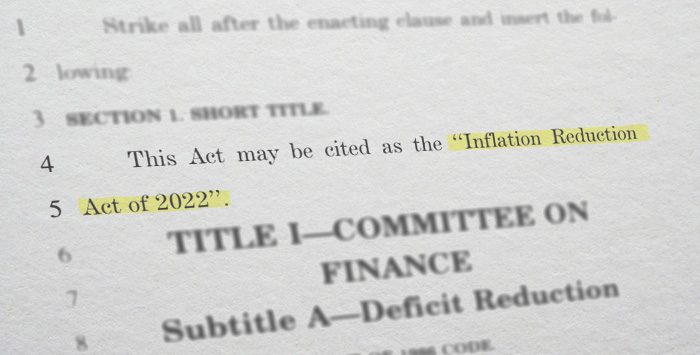
Beginning in 2023, a series of changes began to be phased in under the Inflation Reduction Act, designed to lower out-of-pocket costs, expand access to vaccines, and rein in drug price increases.

The Inflation Reduction Act – passed in August 2022 – was designed to decrease how much Medicare enrollees have to spend on diabetes care.

Reasons to consider a change to your Medicare prescription drug coverage may include high premiums, changes to your prescriptions or your plan's formulary, and your access to in-network pharmacies.

Prescription drugs – and drug coverage – can be less expensive if you're willing to do a little research and to reach out for help. Here are eight strategies that will empower you to take control of your drug coverage and your medication costs.
Beginning in 2023, a series of changes began to be phased in under the Inflation Reduction Act, designed to lower out-of-pocket costs, expand access to vaccines, and rein in drug price increases.
The Inflation Reduction Act – passed in August 2022 – was designed to decrease how much Medicare enrollees have to spend on diabetes care.
Reasons to consider a change to your Medicare prescription drug coverage may include high premiums, changes to your prescriptions or your plan's formulary, and your access to in-network pharmacies.
Prescription drugs – and drug coverage – can be less expensive if you're willing to do a little research and to reach out for help. Here are eight strategies that will empower you to take control of your drug coverage and your medication costs.
Footnotes
From that point until the end of 2024, the donut hole was “closed” but still existed. That meant enrollees in standard Part D plans paid 25% of the cost of their medications both before the donut hole (during the initial coverage phase, after the deductible was met) and during the donut hole. But most enrollees did not have standard plans, which meant they generally had copays during the initial coverage phase, and then transitioned to the 25% coinsurance during the donut hole.
So even though the donut hole was closed by the ACA, enrollees often found that their out-of-pocket costs at the pharmacy changed when they moved from the initial coverage phase to the donut hole phase.
But as of 2025, the “donut hole” was fully eliminated, due to the IRA.[efn_note]“CMS Releases 2025 Medicare Part D Bid Information and Announces Premium Stabilization Demonstration” Centers for Medicare & Medicaid Services. Jul. 29, 2024 ⤶

