Please provide your zip code to see plans in your area.
A PROPERTY OF HEALTHINSURANCE.ORG, LLC, A NON-GOVERNMENTAL ENTITY
Since 2011, we've helped more than 5 million visitors understand Medicare coverage.
A PROPERTY OF HEALTHINSURANCE.ORG, LLC, A NON-GOVERNMENTAL ENTITY
Find Medicare plans that fit your needs.*
Enroll in a plan today.
* By shopping with our third-party insurance agency partners. You may be in contact with a licensed insurance agent from an independent agency that is not connected with or endorsed by the federal Medicare program.
We do not offer every plan available in your area. Any information we provide is limited to those plans we do offer in your area. Please contact Medicare.gov or 1–800– MEDICARE to get information on all of your options.

Medicare Part D is prescription drug coverage that subsidizes the costs of prescription drugs for Medicare beneficiaries. Enrollees pay a monthly premium (depending on how they get their coverage, this can be as low as $0/month), and cost-sharing that varies from plan to plan. It’s common for the cost-sharing to include an annual deductible and then copays or coinsurance each time a prescription is filled.
Medicare recipients can obtain Part D coverage by enrolling in either a stand-alone prescription drug plan (PDP) – which covers only prescription drugs – or a Medicare Advantage plan with integrated Part D coverage, which covers prescriptions and other medical expenses.
As of 2022, more than 50 million Medicare beneficiaries had prescription drug coverage through Medicare Part D. The total is split between those who have Part D coverage in conjunction with a Medicare Advantage plan (ie, a Medicare Advantage prescription drug plan — MAPD), and those who have stand-alone Part D prescription drug plans (PDPs), most of which are purchased to supplement Original Medicare.
The number of people with Part D coverage through an MAPD is now higher than the number of people with PDP coverage. As of September 2022, there were 27.2 million people with MAPD plans, and 23.4 million with PDPs.
The Inflation Reduction Act, which was enacted in 2022, is making significant improvements to Medicare Part D coverage, with changes that began to phase in as of 2023. Some Part D enrollees have lower drug costs, and all Part D enrollees are now eligible for zero-cost vaccines.
All prescription drug coverage for Medicare beneficiaries is provided by private insurance companies, as Medicare A and B (ie, Original Medicare) don’t cover most outpatient prescriptions (the exception is infusion drugs provided in a doctor’s office or via medical hardware like an insulin pump; those medications are covered under Part B).
Most Medicare Advantage plans do include prescription drug coverage (89% do so for 2023). If you’re enrolled in a Medicare Savings Account (MSA) plan or Private Fee-for-Service (PFFS) plan that doesn’t include Part D coverage, you have the option to enroll in a stand-alone Part D plan to supplement your coverage. Otherwise, Medicare Advantage enrollees who want prescription drug benefits need to enroll in a Medicare Advantage plan that has integrated Part D coverage.
People with Original Medicare can choose from among any of the available stand-alone Part D plans (PDPs) in their area. Some Medicare beneficiaries have drug coverage from a current or former employer, and thus do not need to enroll in Part D.
The first opportunity for Medicare Part D enrollment is when you’re initially eligible for Medicare – during the seven-month period beginning three months before the month you turn 65.
If you enroll prior to the month you turn 65, your prescription drug coverage will begin the first of the month you turn 65. If you enroll during the month you turn 65 or one of the three following months, your prescription coverage effective date will be delayed – it will not be retroactive to the month you turned 65.
If you enrolled in Medicare due to a disability, you may enroll during a seven-month window beginning three months prior to your 25th month of disability. If you enroll in the three months prior to your 25th month of disability, your coverage will begin the first day of the 25th month. If you enroll during the 25th, 26th, 27th, or 28th month of disability, your coverage will begin the first of the month after you enroll (note that the effective date rules are different if a person is enrolling in Medicare due to a diagnosis of ALS or end-stage renal disease).
In both of these cases – whether you’re turning 65 or are eligible for Medicare because of a disability – you have the option of selecting a Medicare Advantage plan that includes prescription drug coverage, and using that in place of Medicare A, B, and D. The enrollment periods and rules are the same as those described above for stand-alone Medicare Part D plans.
After you’ve chosen from the various PDP offerings, you can enroll by:
Once you apply for Medicare Part D, it can take a few weeks for your membership card to arrive. During that time, if you need prescription medications, most pharmacies will accept the initial letter you received from Medicare acknowledging your upcoming membership, or an enrollment confirmation number.
Call 1-844-309-3504 now to discuss your Part D coverage options with a licensed advisor.
In most cases, enrollment outside of your initial enrollment period is limited to an annual enrollment period between October 15 and December 7, with coverage starting January 1 of the following year. During this time, you can enroll in a new PDP or MAPD plan, and coverage is guaranteed issue. If you already had Part D coverage under another plan, the new plan will automatically replace the old one, so you don’t need to do anything other than enroll in the new plan.
If you don’t already have Part D coverage, you can use the fall open enrollment period to sign up for it. But you might be subject to a late enrollment penalty.
If you are enrolled in a Medicare Advantage plan and want to switch to Original Medicare, you can do so either during the fall open enrollment period (October 15 – December 7) or during the Medicare Advantage open enrollment period (January 1 – March 31). If you do so, you’ll also have the option to purchase a Part D plan at the same time, so that you’ll have prescription coverage to go along with your Original Medicare coverage.
If you didn’t enroll in prescription drug coverage – either through a PDP or a Medicare Advantage plan – during your initial open enrollment window and then you enroll during an open enrollment period in a future year, there’s a late enrollment penalty that will be added to your premium (the late enrollment penalty does not apply if you delayed your Part D enrollment because you maintained creditable drug coverage from another source — like an employer-sponsored health insurance plan).
The Part D late enrollment penalty would also apply if you drop your prescription coverage for more than 63 days and then re-enroll during the open enrollment period. It’s important to maintain continuous drug coverage from the time you’re first eligible, both to protect against significant prescription costs, and also to avoid higher premiums when you ultimately re-enroll.
The average Part D plan cost decreased slightly in 2023, to $31.50/month. But the plans are issued by private insurers, and there’s significant variation in terms of the benefits, the formularies (covered drug lists), and the pricing. Among the stand-alone Part D plans available for 2023, premiums range from under $2/month to more than $201/month.
High-income enrollees (for 2023, that’s defined as those with income above $97,000 for a single individual or $194,000 for a married couple) pay extra for their Part D coverage. For 2023, the additional premiums (which are added to the regular amount that the Part D insurer charges) ranged from $12.20/month to $76.40/month. This amount is added to the premium regardless of whether the high-income enrollee selects a PDP or an MA-PD.
The premium adjustment for high-income enrollees is based on income tax returns from two years prior, since those are the most recent returns on file at the start of the plan year. (So for example, 2021 tax returns were used to determine whether you pay an increased Part D premium in 2023). There’s an appeals process you can use to contest the income-related premium adjustment if you’ve had a life-change event that has subsequently reduced your income.
In addition to the premiums, you’ll pay a copay (fixed cost) or coinsurance (a percentage of the cost of your medications) for drugs, and it’s also common for plans to have a deductible that must be met before the plan start to pay for medications (some drugs are not subject to the deductible, including recommended vaccines and insulin).
The “donut hole” (coverage gap) in Part D plans has closed, thanks to the Affordable Care Act. It was fully closed as of 2020: Enrollees with standard Part D coverage now pay 25% of the cost of generic and brand name drugs while in the donut hole, which is the same percentage they pay before entering the donut hole.
But the donut hole is still relevant in terms of how drug costs are calculated towards reaching the catastrophic coverage threshold. And depending on your plan’s design, you may pay more in out-of-pocket costs for your drugs once you hit the donut hole, as the plan may require you to pay less than 25% of the cost prior to the donut hole (with copays that amount to less than a quarter of the price of the drug, for example).
Your out-of-pocket costs will depend on the plan you choose, based on your individual medical needs. Be sure to look beyond the plan’s premium and consider all costs. You can use Medicare’s plan finder tool to help you select the best drug plan to meet your needs. This is a process that you’ll need to repeat each year during open enrollment, as drug formularies (covered drug lists) change along with premiums from one year to the next.
Once you select a PDP, there are four ways to pay the premium:
Some Medicare beneficiaries struggle to afford the high cost of prescription drugs. Although the Affordable Care Act (ACA) reduced the amount enrollees pay – to 25% – during the Medicare Part D donut hole, that amount still is more than some beneficiaries can afford.
Enrollees with limited incomes and resources can apply for Extra Help (Low-Income Subsidy, or LIS). This federal program dramatically lowers prescription drug expenses under Part D. The current income limit is $20,385 a year for singles and $27,465 a year for couples, and the asset limit is $15,510 for individuals and $30,950 for couples (these amounts are indexed each year to keep pace with the federal poverty level).
(Note that there are two levels of Extra Help; people with even lower income and assets can qualify for full Extra Help, while those with incomes up to the amounts listed here can qualify for partial Extra Help. Under the Inflation Reduction Act, which was enacted in August 2022, full Extra Help will be available as of 2024 for people with income and assets up to the level that had previously only qualified for partial Extra Help.)
State Pharmaceutical Assistance Programs (SPAPs) also provide prescription drug assistance to beneficiaries in some states. These programs can pay for Part D premiums, deductibles and co-pays. Income limits for SPAPs are usually much higher than Extra Help.

Changes to 2024 Medicare coverage include increases for Medicare Part B and Part A cost-sharing, Part B premium increases, adjustments to income-related premium surcharges for Part B and Part D, and expanded availability of Extra Help for Medicare Part D prescription drug coverage.
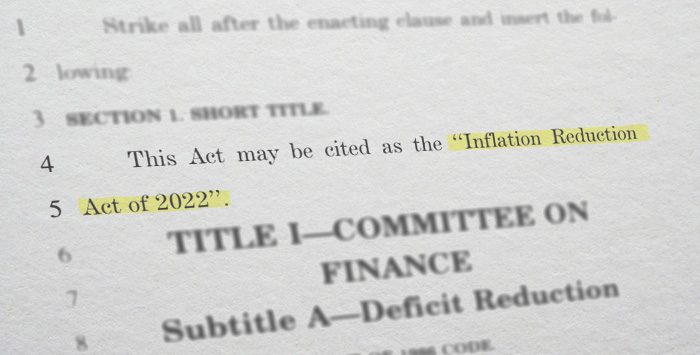
Under the new law, Medicare beneficiaries will see a series of prescription drug-pricing provisions phased in – mostly over the next several years
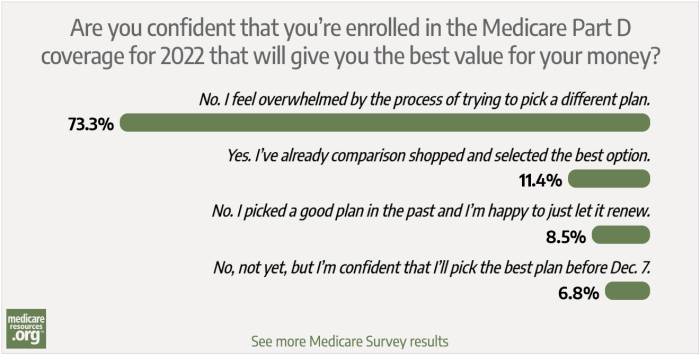
We asked how confident our readers were with comparison shopping for a Medicare Part D plan during the 2022 Medicare Annual Enrollment Period. Here's what we learned from more than 350 survey responses.

Reasons to consider a change to your Medicare prescription drug coverage may include high premiums, changes to your prescriptions or your plan's formulary, and your access to in-network pharmacies.

But prescription drugs – and drug coverage – can be less expensive if you're willing to do a little research and to reach out for help. Here are eight strategies that will empower you to take control of your drug coverage and your medication costs.
Changes to 2024 Medicare coverage include increases for Medicare Part B and Part A cost-sharing, Part B premium increases, adjustments to income-related premium surcharges for Part B and Part D, and expanded availability of Extra Help for Medicare Part D prescription drug coverage.
Under the new law, Medicare beneficiaries will see a series of prescription drug-pricing provisions phased in – mostly over the next several years
We asked how confident our readers were with comparison shopping for a Medicare Part D plan during the 2022 Medicare Annual Enrollment Period. Here's what we learned from more than 350 survey responses.
Reasons to consider a change to your Medicare prescription drug coverage may include high premiums, changes to your prescriptions or your plan's formulary, and your access to in-network pharmacies.
But prescription drugs – and drug coverage – can be less expensive if you're willing to do a little research and to reach out for help. Here are eight strategies that will empower you to take control of your drug coverage and your medication costs.
